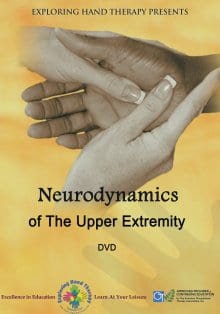
Neurodynamics of the Upper Extremity Evaluation and Treatment Strategies: It’s Not Just About The Hand
| CONTACT HOURS: | 5 Hours |
| CEU: | 0.5 |
| AOTA: |
Domain of OT, OTP, Check Accreditation
|
| NBCOT®: | 6.25 PDUs |
| STATE: |
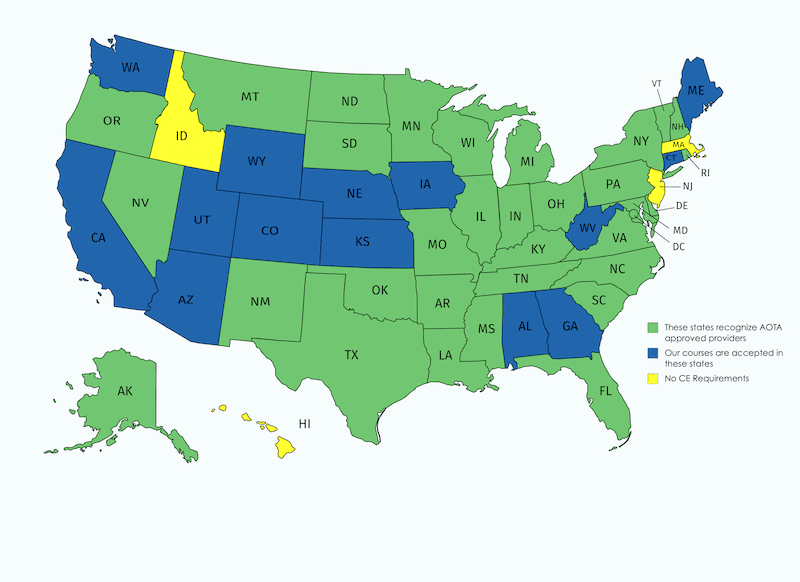
AL 20-171426 5hrs FL 20-171426 5hrs CA 40-H27 6hrs |
This interactive course is in movie format. Have you always wondered while you are treating carpal tunnel patient if they really have neck problems? Does your bilateral ulnar nerve patient really have TOS? Find out answers to this and more now.
Buy Now
$172.00
Hand Therapy Certification
This course is accepted by the Hand Therapy Certification Commission towards re-certification.
Description
*University & multi-center Licensure available upon request; all courses single user only
6.25 NBCOT® PDUs
*Watch on your idevices, smart phones, tablets and MORE
Domain of OT, Occupational Therapy Process
In this exciting 5 contact hour interactive course the clinician will learn ways to evaluate proximal problems that may result in distal symptoms. These evaluation strategies will help determine if the symptoms are distal or if there is a complex of upper quadrant problems such as: neck, shoulder, postural or scapular dysfunction. This course will describe the neural continuum as well as special tests to determine what nerve structure is involved. Emphasis will be placed on understanding and performing upper extremity neurodynamic testing. The student will also be exposed to incorporating both clinical and home treatment strategies.
Note: This course provides conceptual preparation to seek additional training, and does not provide you a mentored hands-on skills session. Please seek additional experience, with a mentor, to perform hands-on skills. Mixed level learning course – Instructional Methods include PowerPoint presentation, lecture, and video to enhance understanding. Upon successful completion of the examination (80%) your certificate will be sent via email
Objectives
- To provide basic information on the mechanics and physiology of the nervous system which is essential for movement
of the upper extremity - To provide a basic understanding of neuroanatomy and neurodynamics as they relate to neuro gliding in the upper extremity
- To describe the neural continuum and ways to test the continuum in the upper extremity
- To differentiate between neural and new neural tissues
- To view the performance of techniques by utilizing “sliders” or “tensioners” so that movement is created
- To identify anatomical and palpable areas in the upper extremity so the course of the nerve may be determined
- To identify the characteristics of pain mechanism-
- Nociceptive Pain
- Peripheral Neurogenic
- Central Sensitizations
- To identify the relationship of neuromusculoskeletal dysfunction in the upper extremity
- Review how to carry out both subjective and physical neurodynamic test in the upper extremity
- Describe pain syndrome
- Review the relationship between pain and myofascial trigger points
- Identify points of neuro movement limitations
- Review the relationship of neurovascular and musculoskeletal dysfunction so a treatment strategy can be developed
- Review how to evaluate the subjective examinations and physical examination to determine an appropriate treatment program for home use
Discounted Add On Item(s) Available with this Product

7 reviews for Neurodynamics of the Upper Extremity Evaluation and Treatment Strategies: It’s Not Just About The Hand
- Participants have one year to access the CEU course and exam to obtain CEUs.
- NBCOT® is a registered trademark of the National Board for Certification in Occupational Therapy, Inc. and does not promote or endorse our specific courses, services or training.
Treatment2go is an AOTA Approved Provider of professional development. PD approval ID #3397. This distance learning-independent activity is offered at 0.5 CEU’s, intermediate, foundational Knowledge. The assignment of AOTA CEU Does not imply endorsement of specific Course content, products, or clinical Procedures by AOTA.




Anonymous –
Very good course
Julie Belden OTR/L/CHT –
I really enjoyed the conference. It laid out the anatomy very clearly, and gave me some great ideas for nerve glides and slides that are easy for my patients to reproduce in a home program.
Connie Dollens –
this was good
Linda Stanton –
This course was very thorough, but very dry. The presenter was excellent and well informed. I learned a lot, but think I will choose courses that are broken into shorter segments in the future.
Anonymous –
Ms. Stralka is extremely knowledgeable on this topic! However, at times she was a little hard to understand, as she contradicted herself on several occasions. I learned quite a bit and look forward to reviewing the material several times to really allow it to resonate. It was a tough topic and quite a bit of helpful info was relayed.